BIR Forms: 1900, 1600, 1800, and 1905 Series
Every tax transaction in the Philippines requires a specific BIR form. The Bureau of Internal Revenue uses different forms for different purposes, and using the wrong one causes delays, penalties, or outright rejection of your filing.
Navigate every BIR form with confidence. Select your taxpayer profile below to find the exact forms, deadlines, and requirements you need.
What are BIR Forms?
BIR forms are official documents issued by the Bureau of Internal Revenue. You use them to register for a TIN, file your taxes, pay withholding tax, declare VAT, or update your registration details.
Think of each BIR form as a specific request form. Each one does one job. Using the right form for the right purpose is the first step to staying tax compliant in the Philippines.
Form Groups Index
BIR forms are organized by number range. Each series serves a distinct fiscal purpose.
1900 Series
Registration
TIN applications, updates, and transfers
1700 Series
Income Tax
Annual income tax returns for all taxpayers
1600 Series
Withholding Tax
Monthly/quarterly remittance of withheld taxes
1800 Series
One-Time Transfers
Property sales, donations, and estate settlements
2000 Series
Other Returns
Percentage tax, VAT, documentary stamp, etc.
Registration Forms (1900 Series)
Registration forms are the first BIR forms you will ever use. You submit these forms when applying for a TIN, registering a business, or updating your existing BIR registration.
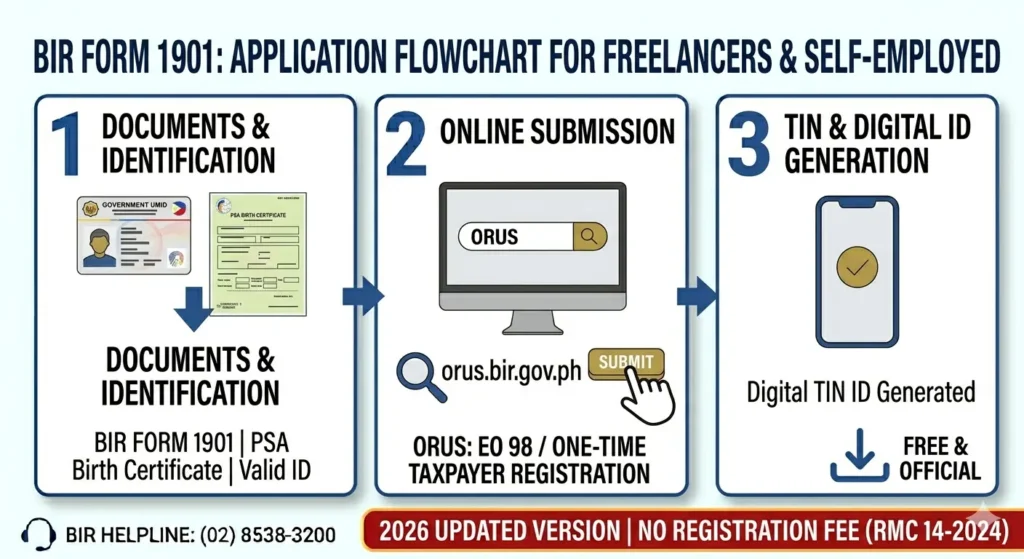
1901
Self-Employed / Freelancer Registration
FreelancerProfessionalSelf-Employed
Register as a self-employed individual, freelancer, or professional for tax purposes.
Who is it for?
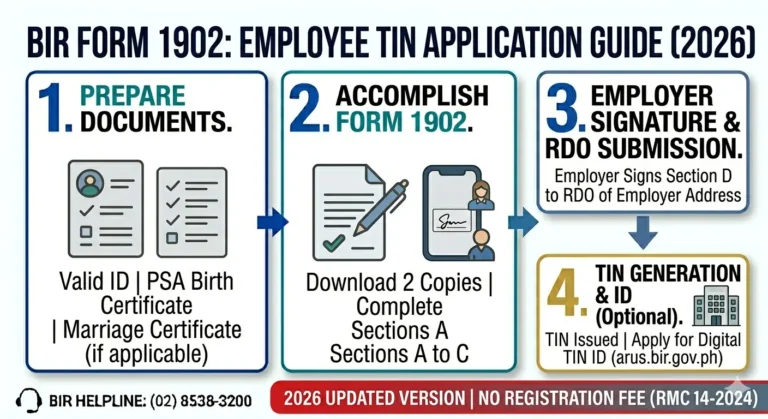
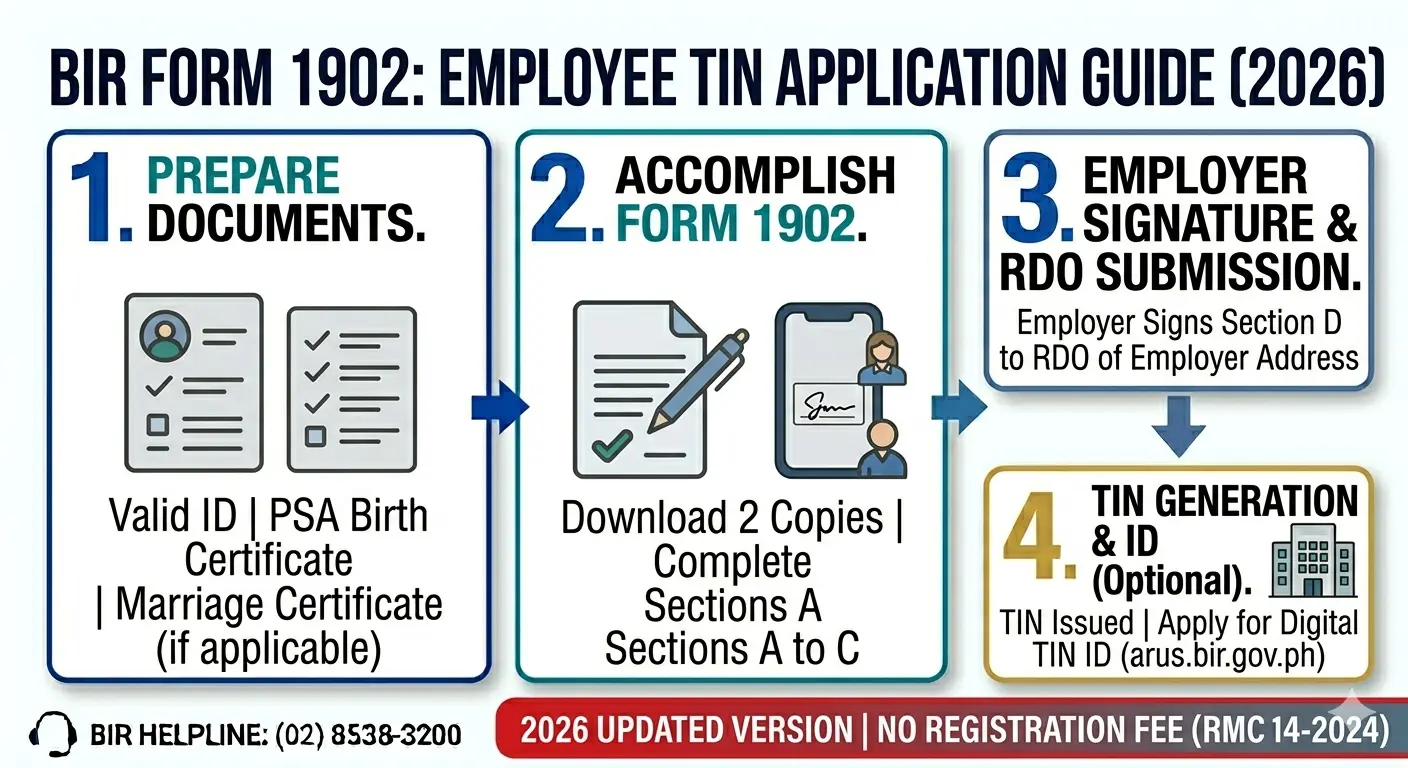
1902
Employee TIN Registration
Employee New Hire
Apply for a TIN as a newly hired employee earning purely compensation income.
Who is it for?
1903
Business / Corporation Registration
CorporationPartnership
Register a corporation, partnership, or cooperative for tax compliance.
Who is it for?
1904
One-Time Taxpayer (No Income)
StudentUnemployed
Get a TIN for non-income transactions like school IDs, bank accounts, or government documents.
Who is it for?
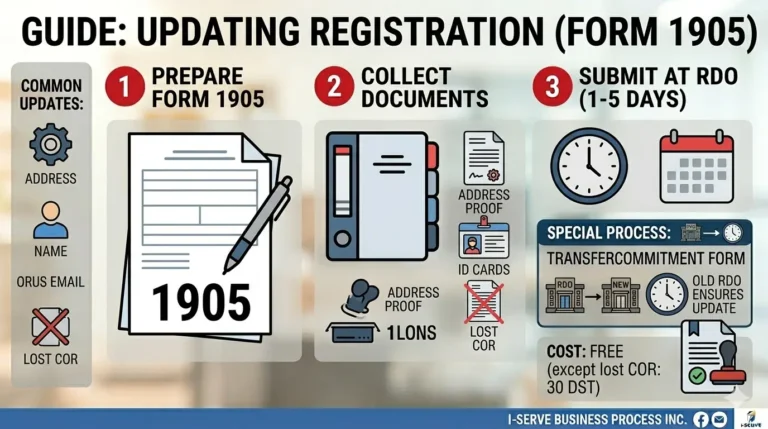
1905
Update Registration Information
All Taxpayers
Amend your taxpayer record — change RDO, address, civil status, or business details.
Who is it for?
1906
Official Receipts and Invoices
What it is: The application form for Authority to Print (ATP), which gives you legal permission to have official receipts and sales invoices printed.
Who uses it: All registered businesses and self-employed individuals who need to issue official receipts to clients.
When to file: After receiving your Certificate of Registration (COR). You cannot legally issue official receipts without an approved ATP.
Income Tax Return Forms (1700 Series)
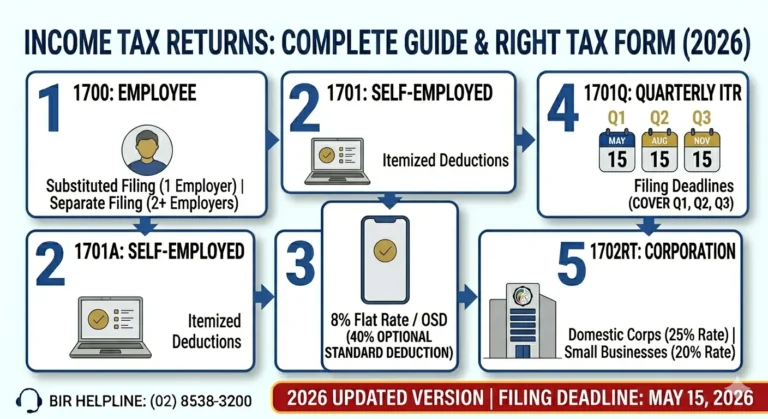
Income tax return (ITR) forms are used to declare your annual and quarterly income to the BIR and pay the corresponding income tax. You file these forms every year without fail.
BIR Form 1700: For Employees with Two or More Employers
What it is: The annual income tax return for purely compensated employees.
Who uses it:
Filing deadline: April 15 annually (extended to May 15, 2026 for the 2025 tax year)Note: If you had only one employer the whole year and your tax was correctly withheld, you do NOT need to file Form 1700. Your employer files BIR Form 2316 on your behalf instead.
BIR Form 1701: For Self-Employed Using Itemized Deductions
What it is: The annual income tax return for self-employed individuals and professionals who list down all their business expenses to reduce their taxable income.
Who uses it:
Filing deadline: April 15 annually (extended to May 15, 2026 for the 2025 tax year)
BIR Form 1701A: For Self-Employed on 8% Rate or OSD
What it is: The simpler version of the annual income tax return for self-employed individuals and professionals who use the 8% flat tax rate or the Optional Standard Deduction (OSD).
Who uses it:
Filing deadline: April 15 annually (extended to May 15, 2026 for the 2025 tax year)
Which should you choose, 1701 or 1701A? If your actual business expenses are less than 40% of your gross income, use 1701A with OSD. If your expenses are higher than 40%, use 1701 with itemized deductions. When in doubt, consult a CPA.
BIR Form 1701Q: Quarterly ITR for Self-Employed
What it is: The quarterly income tax return filed by self-employed individuals, professionals, and mixed income earners three times a year.
When to file:
Quarter | Period Covered | Deadline |
1st Quarter | January to March | May 15 |
2nd Quarter | January to June | August 15 |
3rd Quarter | January to September | November 15 |
The 4th quarter is covered by your annual ITR (Form 1701 or 1701A) filed on April 15.
BIR Form 1702RT: Annual ITR for Corporations
What it is: The annual income tax return for domestic and resident foreign corporations subject to the regular corporate income tax.
Who uses it:
Filing deadline: April 15 of the following year
Withholding Tax Forms (1600 Series)
Withholding tax means the payor deducts a portion of the payment before releasing it, and remits that deducted amount directly to the BIR. These forms are used to report and pay those deducted amounts.
BIR Form 1601C: For Employers Remitting Withheld Salary Tax
What it is: The monthly form employers use to remit the income tax they withheld from employee salaries.
Who files it: Every employer who pays salaries and wages and withholds income tax.
Filing deadline: 10th day of the following month
BIR Form 1601EQ: For Businesses Paying Contractors or Suppliers
What it is: The quarterly form used to remit expanded withholding tax deducted from payments to freelancers, contractors, suppliers, and other service providers.
Who files it: Any business or individual that pays professional fees, commissions, rent, or contractor fees and deducts withholding tax before paying.
Filing deadline: Last day of the month after the quarter ends
BIR Form 2307: Certificate for Freelancers and Suppliers
What it is: A certificate issued by the payor to the payee as proof that withholding tax was deducted from their payment.
Who receives it: Freelancers, consultants, and suppliers who had tax withheld by a client or business.
You attach Form 2307 to your quarterly and annual income tax returns as proof of taxes already paid on your behalf. Always ask your clients for this certificate every time they withhold tax from your payment. Keep all your 2307s throughout the year for your annual filing.
BIR Form 2316: Year-End Certificate for Employees
What it is: A certificate your employer gives you at the end of every year summarizing your total compensation and the total income tax withheld.
Who receives it: All employees from their employer, issued on or before January 31 of the following year.
You need Form 2316 to qualify for substituted filing (no need to file Form 1700 separately). Banks, embassies, and government agencies also accept it as official proof of income.
VAT and Percentage Tax Forms (2500 Series)
These forms are for businesses that need to declare and pay tax on their sales and receipts every month or quarter.
BIR Form 2550M: Monthly VAT Return
What it is: The monthly VAT declaration filed by VAT-registered businesses.
Who uses it: Businesses with annual gross sales exceeding PHP 3 million, or businesses that voluntarily registered for VAT.
VAT rate: 12% of gross sales or receipts
Filing deadline: 20th day of the following month
BIR Form 2550Q: Quarterly VAT Return
What it is: The quarterly summary VAT declaration that consolidates all monthly VAT filings for the quarter.
Filing deadline: 25th day of the month following the close of each quarter
BIR Form 2551Q: Quarterly Percentage Tax Return
What it is: The quarterly tax declaration for non-VAT registered businesses.
Who uses it: Self-employed individuals and businesses with annual gross receipts below PHP 3 million who did NOT choose the 8% flat income tax rate.
Percentage tax rate: 3% of gross quarterly receipts
Important: If you chose the 8% flat income tax rate, you do NOT file Form 2551Q. The 8% rate already replaces percentage tax.
Filing deadline: Last day of the month following the close of each quarter
Property, Estate, and Donation Tax Forms (1800 Series)
These forms cover one-time tax events when property changes hands through a sale, inheritance, or gift.
BIR Form 1800: For Donating Property
What it is: The donor’s tax return filed when you give property as a gift to another person.
Tax rate: 6% of net gifts exceeding PHP 250,000 per year
Filing deadline: Within 30 days from the date of the gift or deed of donation
BIR Form 1801: For Settling an Estate
What it is: The estate tax return filed by the heirs or executor of a deceased person’s estate.
Tax rate: 6% of the net taxable estate
Filing deadline: Within 1 year from the date of death
Note: The BIR Commissioner can grant an extension for estate tax filing in cases of financial hardship. Apply for the extension before the 1-year deadline expires.
BIR Form 1706: For Selling Real Property
What it is: The capital gains tax return filed by a seller of real property classified as a capital asset such as a house or vacant lot.
Tax rate: 6% of the gross selling price or zonal value, whichever is higher
Filing deadline: Within 30 days from the date of notarization of the Deed of Sale
BIR Form 1707: For Selling Shares of Stock
What it is: The capital gains tax return for individuals selling shares of a private company not listed on the Philippine Stock Exchange.
Tax rate: 15% of the net capital gain
Where to Download BIR Forms for Free
All BIR forms are available for free from these official sources. Never pay for a BIR form.
Always download the latest version. The BIR updates forms regularly, and submitting an outdated version may result in rejection.
FAQs
Conclusion
Knowing which BIR form to use is the first step to becoming a fully compliant taxpayer in the Philippines. From your very first TIN registration using Form 1904 or 1902, to your annual income tax return using Form 1701A, to your quarterly VAT filing using Form 2550Q, every tax transaction has a specific form designed exactly for that purpose.
Download all forms for free from bir.gov.ph, submit on time, and keep copies of everything you file. For any question about which form applies to your situation, call the BIR hotline at (02) 8538-3200 or email [email protected] during office hours, Monday to Friday, 8:00 AM to 5:00 PM.